Configuring Bus Communication for Real-Time Applications and Using Existing Behavior Models
Introduction
You need a behavior model if signal values have to change dynamically during run time, e.g., to dynamically respond to signals received from an ECU under test.
If you already have a suitable behavior model, you can add the model to the ConfigurationDesk application and map the bus configuration function ports that provide the required signals to the model. Then, you can implement the bus communication in a real-time application.
Note
This use scenario applies only to the Bus Manager in ConfigurationDesk, not to the Bus Manager (stand-alone).
Workflow
The following table shows detailed workflow steps and indicates the related topics and lessons of this tutorial that guide you through the individual steps.
Step | Work | Related Topic/Lesson | ||
|---|---|---|---|---|
1 | Create a new or open an existing ConfigurationDesk project and application. 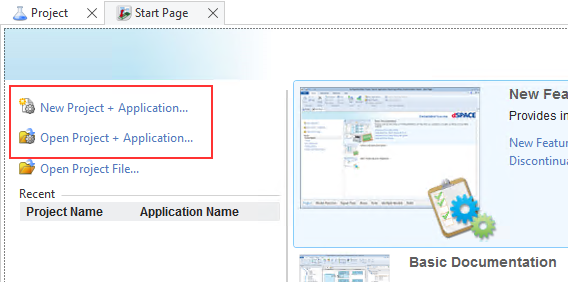 | |||
2 | Add communication matrices and bus configurations to the ConfigurationDesk application. | Lesson 1: Adding Communication Matrices and Bus Configurations to the ConfigurationDesk Application | ||
1 | Add a communication matrix. 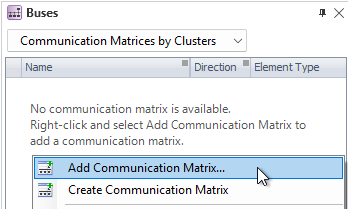 | |||
2 | Add a bus configuration. 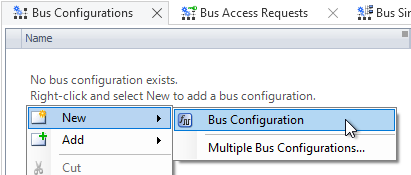 | |||
3 | Assign communication matrix elements to bus configurations for simulation, inspection, and/or manipulation purposes. | |||
Simulation | Lesson 2: Configuring Bus Communication for Simulation Purposes | |||
1 | Assign communication matrix elements to the Simulated ECUs part of a bus configuration. 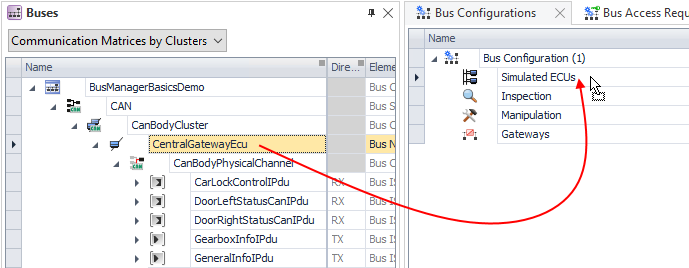 | |||
2 | Configure bus communication for simulation by using bus configuration features. 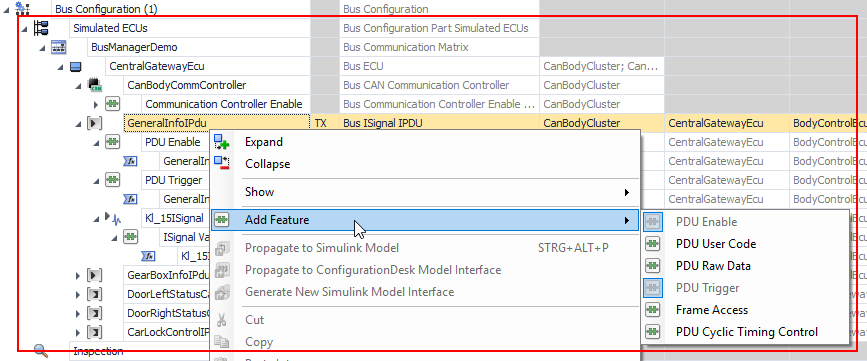 | |||
Inspection | Lesson 6: Configuring Bus Communication for Inspection Purposes | |||
1 | Assign communication matrix elements to the Inspection part of a bus configuration. 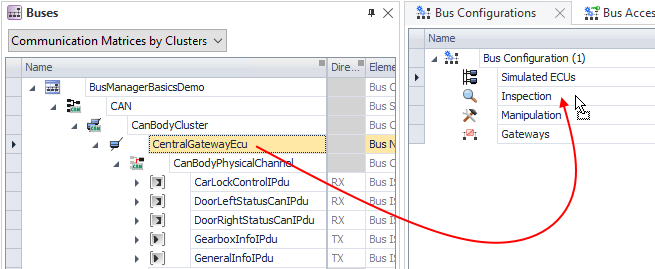 | |||
2 | Configure bus communication for inspection by using bus configuration features. 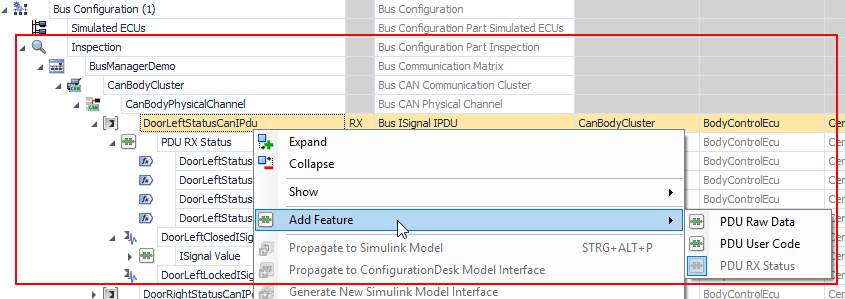 | |||
Manipulation | Lesson 7: Configuring Bus Communication for Manipulation Purposes | |||
1 | Assign communication matrix elements to the Manipulation part of a bus configuration. 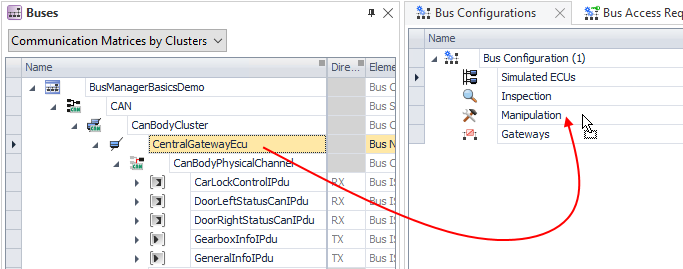 | |||
2 | Configure bus communication for manipulation by using bus configuration features. 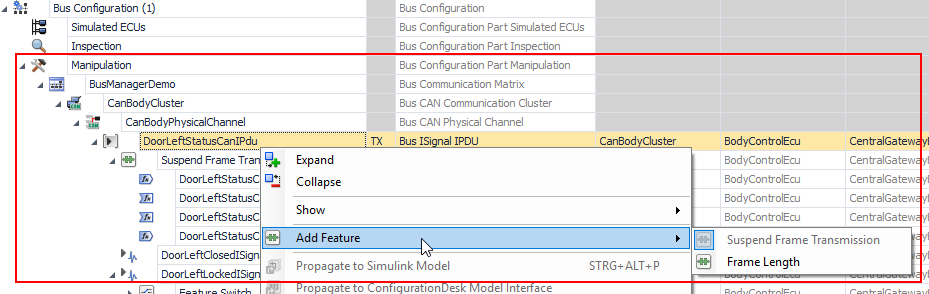 | |||
4 | Add a behavior model to the ConfigurationDesk application and map it to a bus configuration. | |||
1 | Add a behavior model. 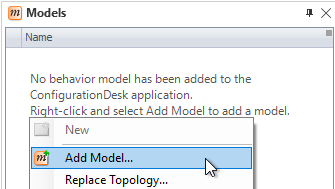 | |||
2 | Map model ports of the behavior model to ports of a bus configuration. 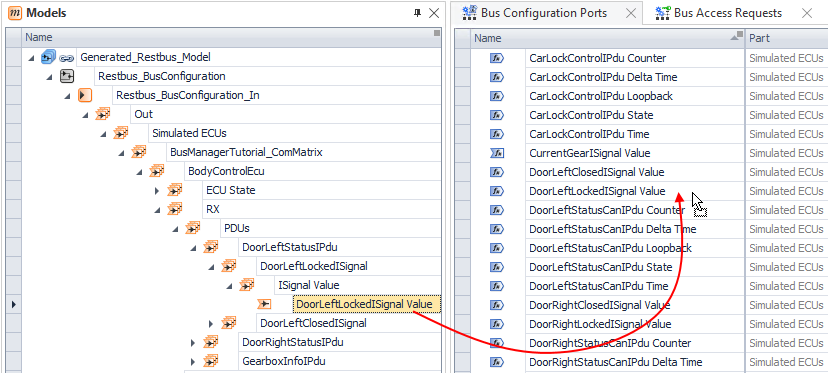 | |||
5 | Specify access to real-time hardware and build a real-time application. | |||
1 | Add a hardware topology to the ConfigurationDesk application. 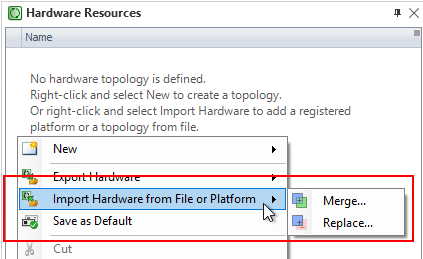 | |||
2 | Specify the access to the bus for the bus configuration. To do this, assign the bus access requests of the bus configuration to bus accesses, i.e., to bus function blocks (CAN or LIN function blocks). 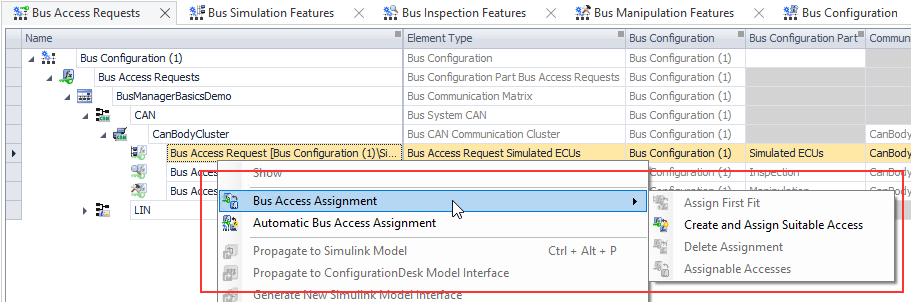 | |||
3 | Assign hardware resources to the bus function blocks. 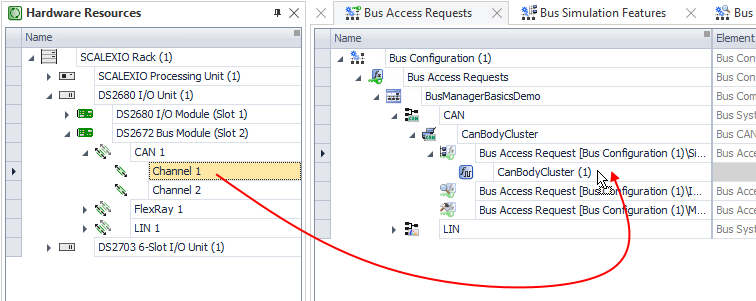 | |||
4 | Configure the bus function blocks according to your requirements. 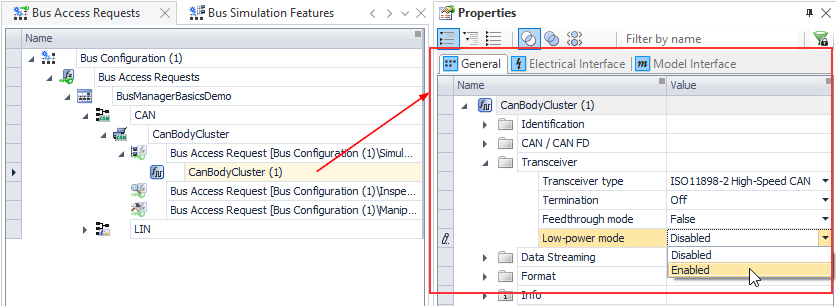 | |||
5 | Check the Conflicts Viewer for conflicts and resolve them, if necessary. 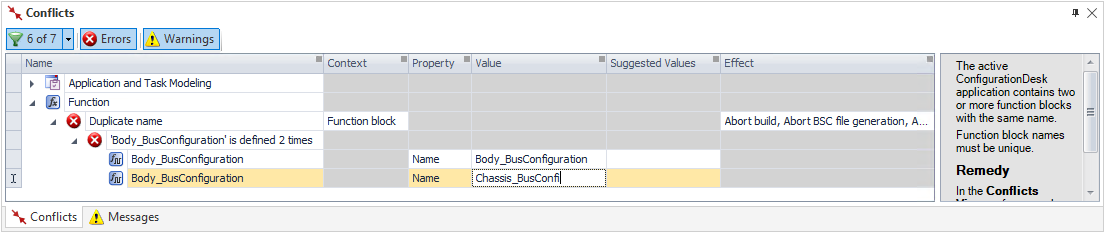 | |||
6 | Start the build process. 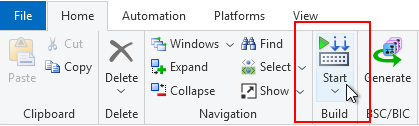 | |||